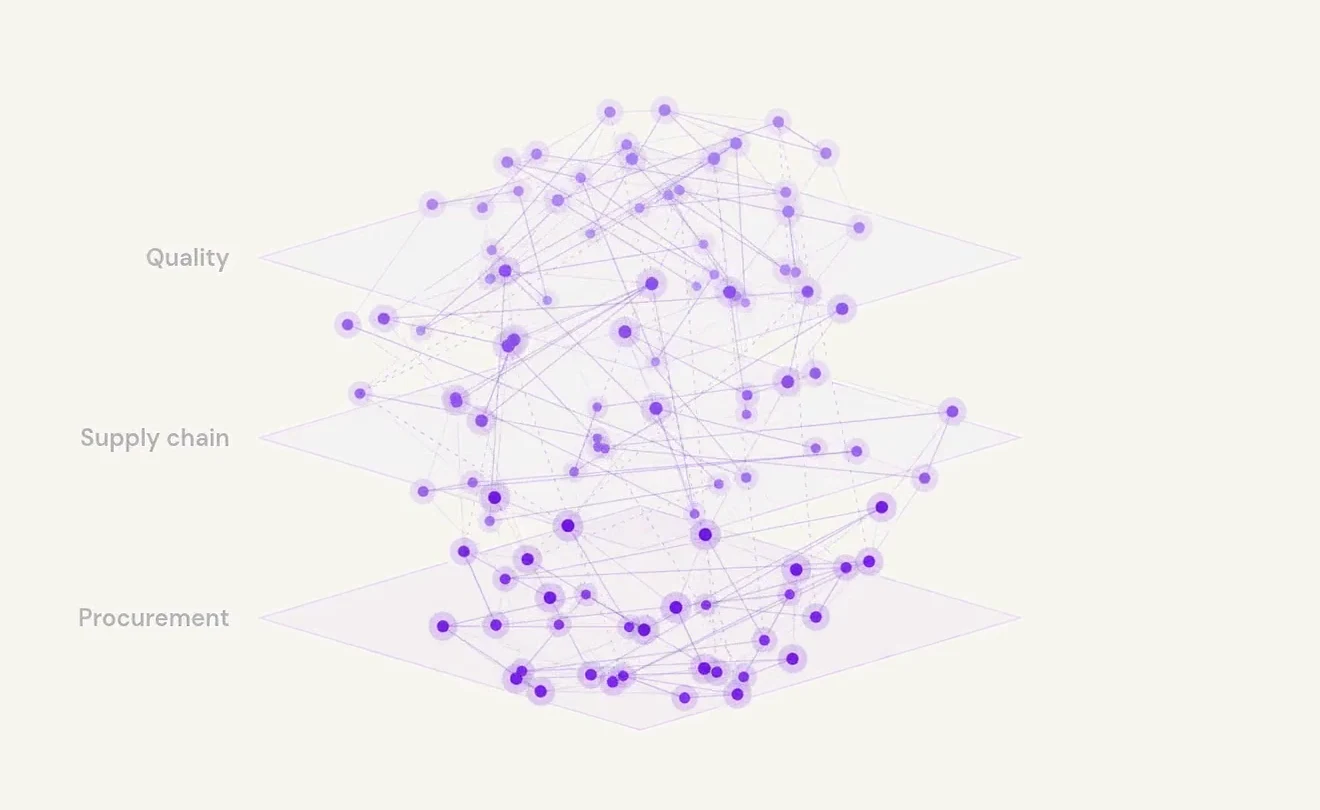
Shared manufacturing context
Keep the requirements, factory knowledge, commercial terms and approved decisions attached to the same part and order.


AI FOR OEMS AND MANUFACTURING SUPPLIERS
LevelPlane helps OEMs and suppliers turn drawings and requests for quotation (RFQs) into manufacturing plans, explainable costs and quoting or sourcing decisions. Start with procurement, on a platform built for connected decisions and coordination across teams, suppliers and customers.
Built for OEMs and the suppliers who make their parts.
IN PRODUCTION TODAY
production parts costed
of actual cost at one of India’s largest automotive OEMs.
Results from this production engagement. Evaluate performance on your own parts and factory context.
Explore customer workSTART WITH PROCUREMENT
Use drawings, requirements and factory data to prepare an RFQ, build a cost or compare supplier offers.
Check requirements and revisions, flag missing inputs and prepare specific questions for your experts.
For supplier teamsReview the manufacturing route, machine choices, cost drivers and assumptions before setting a price.
Explore process and costBring the engineering and commercial reasoning into the same review, whether you are preparing a quote or comparing supplier offers.
For OEM teamsTHE BROADER PLATFORM
Aven coordinates specialist agents around shared company context. Engineering, procurement and commercial decisions stay connected, with supply chain and quality in the planned expansion. Your team approves; accepted reasoning carries into the next relevant job.
Check the drawing and process, material availability, supplier commitments, production capacity and quality readiness. Carry the reasoning into one response the customer can rely on.
Keep the requirements, factory knowledge, commercial terms and approved decisions attached to the same part and order.
Connect the next action, responsible team and supplier or customer response. The planned coordination workflows carry context through each handoff.
Surface missing RFQ inputs today. Planned supply and quality workflows extend the review to supplier delays, capacity conflicts and quality exceptions.
Start with RFQ validation, manufacturing plans and cost decisions. Customer and supplier coordination, supply risk and quality workflows are planned expansion of the same platform.
Build stronger RFQs and sourcing decisions. Explore a connected approach to supplier follow-ups, quality, supply continuity and risk response.
Understand the cost, compare supplier offers and bring specific engineering questions into the negotiation.
LevelPlane for OEMsFOR THE TEAMS THAT MAKE THEM
Assess more opportunities, prepare reliable quotes and respond to changes with confidence in your costs and commitments.
LevelPlane for suppliersCUSTOMER WORK
See the results in cost accuracy and RFQ delivery, and how teams coordinate the work behind them.
Explore customer stories
One of India’s largest automotive OEMs uses LevelPlane in production, with cost estimates within 5% of actual cost across 500+ parts.
A manufacturing supplier increased RFQ response capacity to 3× its previous level and delivered 100% of responses on time.

A commercial vehicle program targets four hours of buyer effort per RFQ, from an estimated three days, with sourcing, quality and supply using the same part context.
Customer identities are withheld. Images illustrate the work.
RESOURCES
Explore the manufacturing framework, worked examples and research behind the product.
Explore resources
What adaptive manufacturing means, the five levels from L1 to L5, real industry examples and a practical guide to evaluation.
Read the adaptive manufacturing whitepaper
Follow one housing from drawing requirements through the factory route, cost breakdown and reasoning behind every line.
Read the updated whitepaper
The 15 questions that matter: business outcomes, shared context, learning, integrations, approvals and getting started.
Read the answers
A comparison of an agentic extraction pipeline and four multimodal models on 47 engineering drawings. Dimension extraction and volumetric recovery are evaluated separately from costing.
Read the benchmarking paperSTART WITH A REAL PART
Tell us about the part, quotation or workflow you want to improve. We’ll agree what to evaluate and which inputs are needed.
Talk to us